Load, Performance & Stress Testing — made simple

LPS Tool is a flexible framework for testing your web application's performance under simulated load with structured rounds, iterations, and powerful iteration modes.

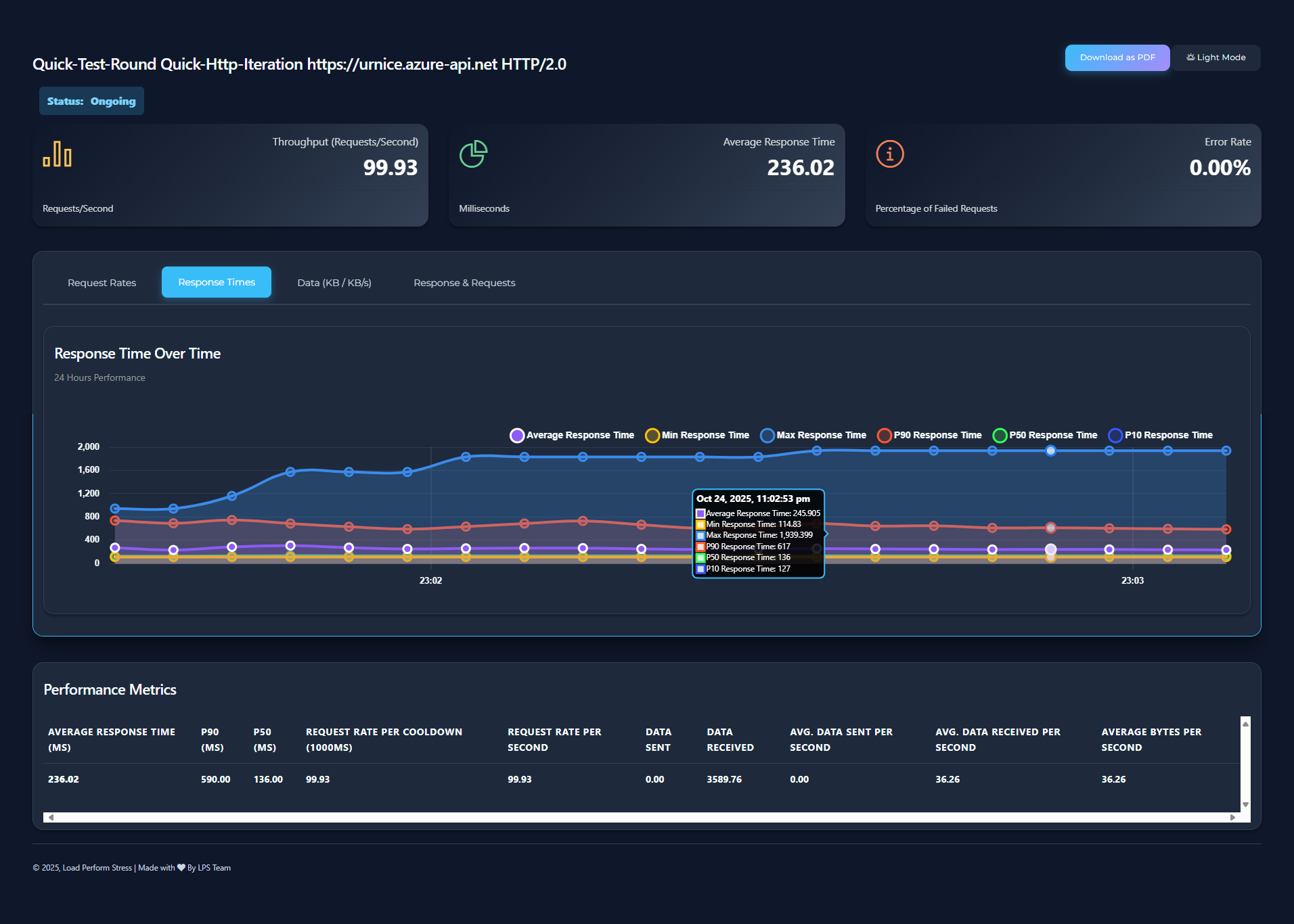
LPS Realtime Dashboard preview

Powerful Features for Modern Testing

LPS Tool provides everything you need to build comprehensive load testing scenarios

🔄

Structured Testing

Built on Rounds and Iterations for organized, realistic testing scenarios that simulate real user behavior.

🎛️

Realistic Traffic (Iteration Modes)

Switch Iteration Modes to mimic real users and bursts.

🌐

Distributed Testing

Scale across multiple nodes with master-slave architecture for high-volume load testing.

📊

Real-time Dashboard

Monitor essential metrics with an intuitive dashboard that updates dynamically during tests.

Declarative Methods

Dynamic value generation with built-in methods for random data, counters, timestamps, and more.

⏭️

SkipIf (Conditional Run)

Skip an iteration based on runtime expressions and variables — ideal for branching logic during a run.

Failure Criteria

Post‑run quality gates (max error rate, P90/P50, etc.) to classify iterations as pass/fail for reporting.

🛑

Termination Rules

Real‑time stop conditions with grace periods (e.g., sustained high error rate) evaluated at the master node.

🛡️

Watchdog Protection

Automatic resource monitoring and test control to prevent the running machine from overload during testing.

Quick Installation

Prerequisite: .NET 8 SDK must be installed on your machine.

# 1) Verify .NET 8 is installed
dotnet --list-sdks
# 2) Install the LPS .NET global tool
dotnet tool install --global lps
# 3) Check the tool is available
lps --help

Tip: If the command isn't found, add the .NET tools path to your PATH environment variable (shown by dotnet tool list -g).

How LPS Tool Works

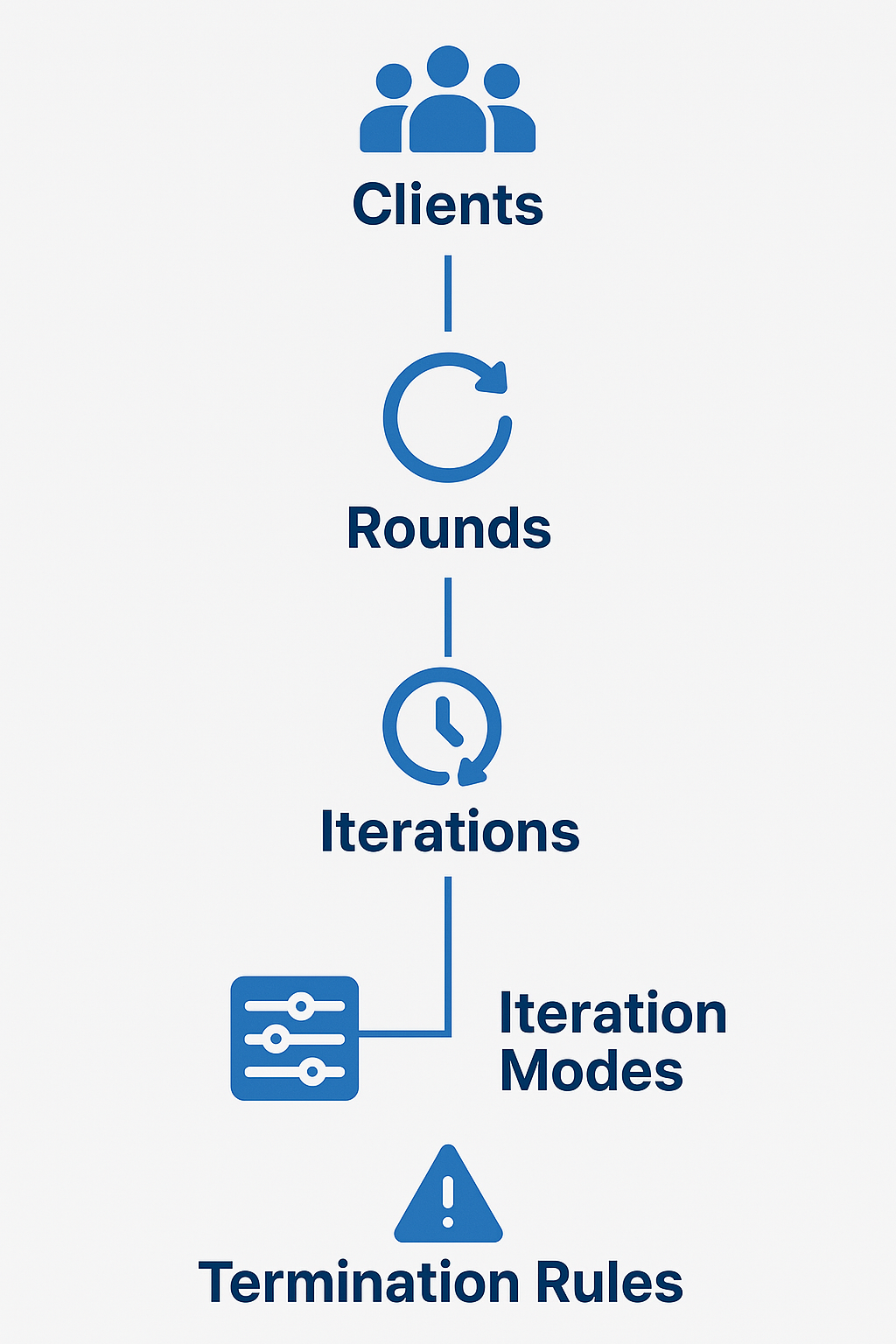
The LPS structure gives you full control with a simple, powerful architecture

1

Clients

Virtual users that run groups of iterations, simulating gradual user entry into the system.

2

Rounds

Testing phases that run sequentially, each with its own configuration and client count.

3

Iterations

Individual scenarios within a round that define target endpoints and execution behavior.

4

Iteration Modes

Control the pattern and timing of requests to simulate realistic user behavior.

Architecture Overview

A high-level view of LPS components and how they interact during runs.

LPS Architecture Diagram

Simple Yet Powerful Configuration

Define complex testing scenarios with clean, readable YAML configuration

# Health check with 3000 concurrent users
name: "APIHealthCheck"
rounds:
  - name: "HealthCheckRound"
    numberOfClients: 3000
    arrivalDelay: 1000
    iterations:
      - name: "HealthCheckIteration"
        httpRequest:
          url: "https://api.example.com/health"
          httpMethod: "GET"
        mode: "R"
        requestCount: 10
# Run with: lps run APIHealthCheck.yaml

Ready to Start Testing?

Download LPS Tool today and take control of your application's performance and scalability

Get LPS Tool